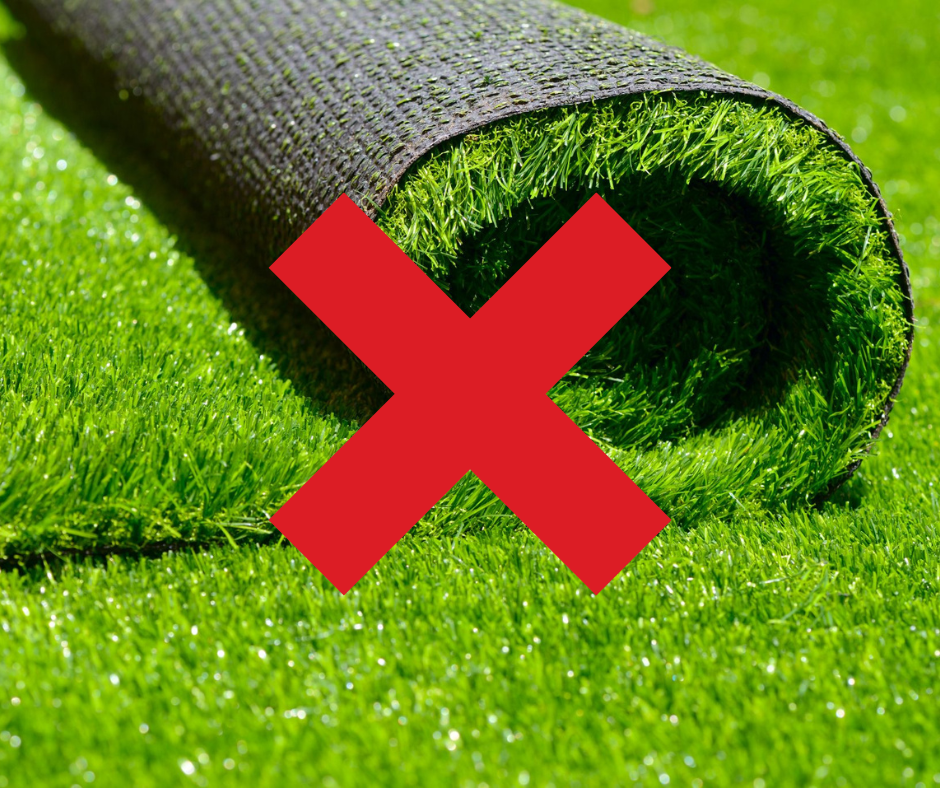
Disadvantages of Synthetic Turf
Synthetic Turf Being Low Maintenance is a Myth, Plain and Simple
When leaves, sticks and other seasonal debris fall onto it, they will not break down like in a natural ecosystem. Instead, you will either need to rake or sweep everything up or vacuum your lawn which poses its own host of problems.
Windborn weed seeds will plant themselves and germinate in synthetic turf. This means you will still need to weed your lawn and need to use extra care since you can not mow them down or dig them out without creating patches or holes in your turf.
Synthetic Turf is Harmful to Human and Environmental Health
Synthetic turf harbours dust, pet waste, hair and other harmful bacteria-ridden substances that would normally be broken down by soil microbes. Instead, that bacteria will sit and accumulate on the surface, being transferred around by feet, playing children, pets, etc. It's been proven that people get more MRSA (Staphylococcus aureus) infections from playing on synthetic turf fields than conventional grass. Synthetic turf also contains PFAS and many other harmful chemicals. Since synthetic turf is made of various petrochemicals such as ground-up tires, it is highly flammable by nature and is often treated with a number of flame-retardants, which only add to the toxicity.
Synthetic turf is known to have drainage issues which can cause unforeseen pooling of water around properties and negatively affect the replenishment of the underground water table.
Synthetic turf will inevitably reduce the health of the soil biome which is the foundation of a healthy landscape. Without regular water, sun exposure and being inundated with various chemicals, soil microbes will suffer. These little microbes are often overlooked but are responsible for helping with nutrient uptake by plants, the breakdown of organic matter, water movement through the soil, soil density, compaction, erosion control and a plethora of other beneficial functions.
On average, synthetic turf sheds 8% of their blades per year which sheds PFAS-contaminated microplastics into the air, soil, waterways and oceans.
Since synthetic turf does not contain water or absorb light to photosynthesize such as natural grass, it will actually hold onto heat and can heat up to temperatures of 70-80°C or 160-180°F. These high temperatures can burn human and animal skin when walked on and will eventually cause the turf to melt which releases toxic gases into the air.
Lastly, synthetic turf is very expensive to install and needs to be replaced once it melts, becomes discoloured or wears out which is just more money out of your pocket.
From what I've observed, many people pick synthetic lawns for being drought tolerant or low maintenance but do not realize the unforeseen prices they'll pay for that evergreen petrochemical-based landscape.
There are so many great lawn alternatives available nowadays to choose from like native grasses, clover, yarrow, thyme and other low-maintenance plants and I gladly offer sustainable lawn conversions as a service.