


Best Mulches for Wildfire Resilience
Updated: Jun 23
Mulch is one of the most crucial parts of a wildfire-resilient landscape. Many gardeners focus on plant selection, but the material covering the soil can dramatically influence how fire moves through a property. Some mulches hold moisture and help slow ignition. Others can act like dry fuel sitting directly beside your home or under flammable plants.
The good news is that you do not need to eliminate mulch. In fact, mulch remains incredibly important for soil health, moisture retention, weed suppression, and supporting healthy plant growth. The key is choosing the right mulch, at the right time, in the right place.

Why Mulch Matters in Wildfire Resilience
During a wildfire, embers are often the biggest threat to homes. Wind can carry burning embers long distances where they land in dry debris, under plants, beside fences, or in mulch beds.
Highly combustible mulches can ignite easily and allow fire to spread rapidly through the landscape. And it's not just wildfire these mulches are prone to, mulches can ignite from cigarette butts, bbqs and even concentrated light.
A wildfire-resilient landscape focuses on reducing available fuel around structures while still supporting ecological function and beauty. That means selecting mulch materials carefully, especially within the first 1.5 metres (5 feet) around the home.
The Best Mulches for Wildfire Resilience
Compost

Mature compost is one of the safest organic mulch choices for wildfire resiliency. Because compost is broken down and biologically active, it tends to retain moisture better than coarse woody mulches and is less likely to ignite.
Benefits of mature compost include:
- Improving soil structure
- Increasing water retention in soil
- Feeding soil microorganisms
- Supporting healthier, more drought-resilient plants
A 2" layer of compost topped with living, low-flammability groundcover can be an excellent low-fuel option in many gardens. FireSmart recommends using mature compost anywhere beyond the first 1.5m(5ft) from a structure.
Gravel and Rock Mulch

Gravel, crushed rock, and stone are some of the most fire resistant mulch options available since they do not ignite and create a natural fuel break around structures.
That said, rock mulch should be used mindfully because large expanses of rock can absorb and radiate heat during summer, potentially stressing nearby plants and decreasing soil health. They can also accumulate dry organic matter between the stones so it is important to consistently maintain them properly.
FireSmart suggests that rock mulches work well in the first 1.5m(5ft) around structure foundations, along pathways, under decks and in garden beds.
Living Mulches and Groundcovers
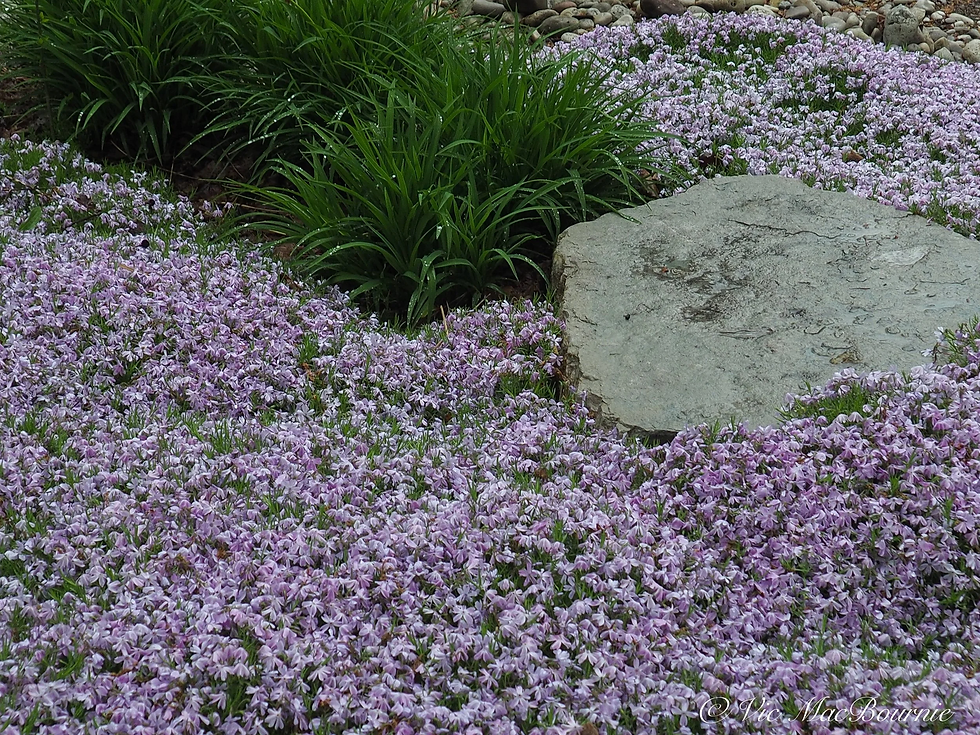
One of the most ecologically sound approaches to mulching is replacing bare mulch areas with living plants. Lush, green, hydrated groundcovers are often much less flammable than dry exposed mulch and provide additional ecological benefits such as:
- Shading soil naturally - Reducing weed pressure
- Supporting pollinators
- Holding moisture in the landscape
- Reduce erosion
Some great low-growing, fire-resilient options include Kinnikinnick, lithodora, self-heal, sedums, strawberries, violets, wild ginger, creeping phlox and more!
FireSmart recommends using green mulches anywhere beyond the first 1.5m(5ft) from a structure.
Mulches to Avoid
Bark Mulch
Small bark nuggets, finely shredded bark and even arborist chips can ignite quickly because they dry out rapidly and contain a lot of surface area exposed to oxygen.
Pine Needles
Pine needles are highly combustible because they contain flammable resins. They're often very dry and can carry fire rapidly across a landscape.
Dry Straw
While useful in edible gardens, dry straw can ignite extremely easily and should be kept well away from structures.
Rubber Mulch
Rubber mulch is one of the most hazardous choices in fire-prone areas. Once ignited, it burns intensely, produces toxic smoke, and is very difficult to extinguish.
Maintenance Matters More Than Perfection
Wildfire resiliency is not about creating a sterile landscape, and even the best mulch can become hazardous if neglected. Proper maintenance reduces opportunities for fire to spread, which can include:
- Removing dry leaves and debris from mulch beds
- Preventing excessive mulch buildup (2-4" max)
- Keeping organic mulches moist
- Keeping plants healthy and hydrated
- Pruning out dead, woody material
- Maintaining spacing between plants
A well-maintained garden is often far more resilient than one left unmanaged.
Designing with Zones in Mind
One of the best wildfire-resilient strategies is using different mulch materials in different zones.
For example:
- Closest to the home (0m-1.5m/0ft-5ft): gravel, stone, pavers
- Mid zone planting beds (1.5m-10m/5ft-30ft): compost or living groundcover
- Outer zones (10m-30m/30ft-100ft): thinly spread arborist chips
This layered approach helps balance fire safety with ecological gardening practices.


