


Why Caterpillars Benefit Your Garden
To most gardeners, seeing a few caterpillar-chewed leaves can feel like a problem that needs solving, but what if those missing leaves are actually a sign that your garden is a healthy, thriving ecosystem?
Caterpillars are among the most important creatures in any healthy ecosystem. While they may nibble on foliage for a few short weeks, their ecological value far outweighs the cosmetic damage they cause. If you want a garden that supports birds, pollinators, and biodiversity then inviting caterpillars into your landscape is one of the best things you can do!
Here are a few of the many benefits caterpillars have in your garden:

Caterpillars feed birds
Perhaps the most important role caterpillars play is serving as food for nesting birds. Did you know that nearly all songbirds rely on caterpillars to raise their young? While adult birds may eat seeds, berries, or other insects, nestlings require soft, protein-rich food that is easy to digest. Caterpillars provide exactly that!
Research by entomologist Douglas Tallamy has shown that
a single clutch of chickadees can require between 6,000 and 9,000 caterpillars to successfully raise one brood of young.
Other insect-eating birds have similarly enormous appetites during nesting season and without caterpillars, many birds simply cannot reproduce successfully.
Transforms plants into wildlife
Plants capture energy from the sun through photosynthesis, but very few animals can eat leaves directly so caterpillars act as the bridge between plants and the rest of the food web. They convert plant material into nutrient-rich food that can then support birds, spiders, reptiles, amphibians, mammals, predatory insects, and countless other wildlife species. In other words, caterpillars transform sunlight into biodiversity.
Future pollinators

Every butterfly begins life as a caterpillar, but many people forget that moths also start this way.
Adult moths are incredibly important pollinators, particularly at night when bees are inactive. They pollinate many native wildflowers while providing food for bats and nocturnal wildlife.
Supporting caterpillars means supporting the next generation of butterflies and moths.
Native plants support native caterpillars
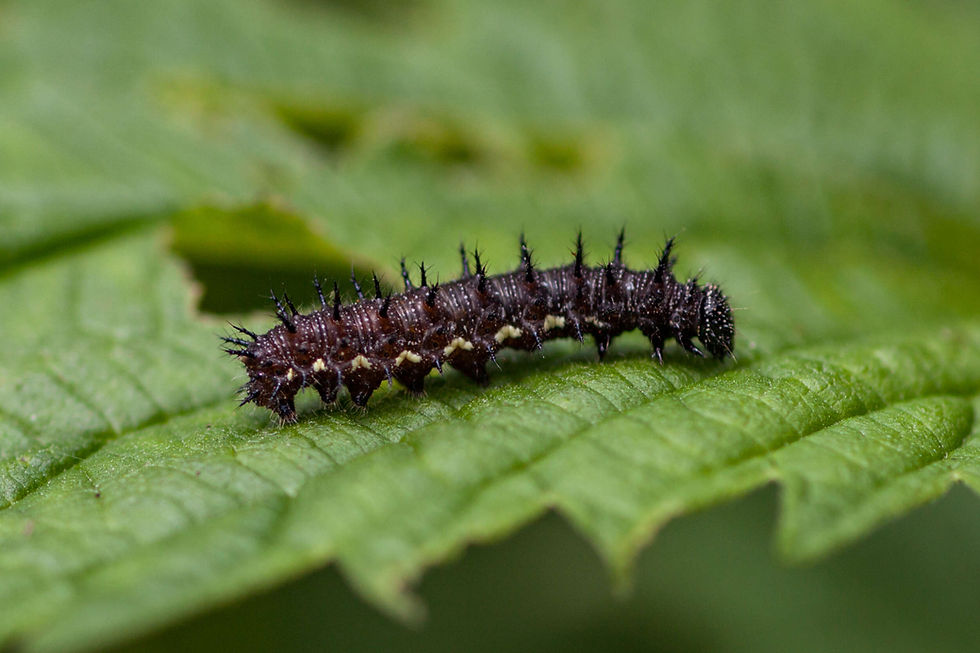
Many butterflies and moths can only lay their eggs on particular native host plants because their caterpillars cannot survive on anything else.
For example:
Garry oak supports over 400 different insect species.
Willows are among the most productive wildlife plants in North America.
Red flowering currant supports numerous native moths and butterflies.
Oceanspray, native roses, snowberry, and Douglas fir all host a wide diversity of caterpillar species.
Many ornamental plants from other parts of the world provide nectar for adult butterflies but cannot support their caterpillars.
This is why planting native species has such an huge ecological impact.
Ways to welcome caterpillars
Creating a welcoming caterpillar habitat is surprisingly simple and it doesn't take long to see the benefits caterpillars can have in your garden.
Plant a wide variety of native trees, shrubs, grasses, and wildflowers.
Avoid pesticides, including products labelled as organic, unless absolutely necessary.
Leave some leaves and stems in autumn so insects can complete their life cycles.
Accept a small amount of leaf damage as part of a healthy ecosystem.
Increase plant diversity to support a wider range of butterfly and moth species.
Celebrate tattered leaves!

Perfect leaves may look attractive to us, but they often indicate a garden with very little insect life.
Small holes, minor chewing, or slightly tattered foliage usually mean your plants are supporting native insects exactly as nature intended.
Most healthy plants easily tolerate this level of feeding without any long term harm. In fact, moderate browsing often has little effect on overall plant health.
Learning to appreciate a little leaf damage is one of the biggest mindset shifts in ecological gardening.
And now you've got the kind of garden caterpillars should love!


