


Best Fruit Trees for Small Yards
- Feb 1
- 4 min read
Having limited space or a small yard doesn’t mean you have to forgo the joy of growing fresh, homegrown fruit. Southern Vancouver Island and the Southern Gulf Islands' mild climate makes them perfect for cultivating a variety of fruit trees, especially compact dwarf and semi-dwarf varieties. To make the most of your space, combining the right tree varieties with specific pruning techniques, such as espalier, can help you achieve abundant harvests without overcrowding your garden.
The first thing you should know is....
What's the Difference Between Dwarf and Semi-Dwarf Fruit Trees?
Dwarf Fruit Trees:
Grow 6–10 feet tall but can also be maintained at smaller heights with pruning.
Produce full-sized fruit on smaller trees, making them perfect for tight spaces or container planting.
Often grafted on a dwarf variety rootstock.
Easy to prune and harvest.
Semi-Dwarf Fruit Trees:
Grow 10–16 feet tall but can also be maintained to shorter heights with regular pruning.
Offer larger yields than dwarf trees while remaining compact enough for smaller backyards.
Best suited for slightly larger spaces or espalier training.
Often higher maintenance to keep them in a dwarf state.
Best Fruit Trees and Varieties for Small Yards
Apple Trees
Dwarf Varieties to Try:
‘Scarlet Sentinel’ (Columnar): A space-saving apple tree with crisp, sweet red apples. Maximum size: 6–8 feet tall.
‘Honeycrisp’ (Dwarf): A favorite for its ultra-crisp texture and sweet-tangy flavor. Maximum size: 8–10 feet tall.
Pruning Tip: Apples are one of the best trees to train as an espalier against a sunny wall or fence to save space and increase sun exposure.
Pear Trees
Dwarf Varieties to Try:
‘Seckel’ (Dwarf): A compact tree with small, sweet pears perfect for fresh eating. Maximum size: 8–10 feet tall.
‘Bartlett’ (Semi-Dwarf): A reliable producer of juicy, aromatic pears. Maximum size: 12–15 feet tall.
Pruning Tip: Pears also make excellent espalier and colmunar trees. They are easy to prune and usually have abundant fruit harvests.
Plum Trees
Dwarf Varieties to Try:
‘Italian Prune’ (Semi-Dwarf): Sweet and versatile, ideal for fresh eating or drying. Maximum size: 12–14 feet tall.
‘Green Gage’ (Dwarf): Known for its exceptionally sweet green fruit. Maximum size: 8–10 feet tall.
Pruning Tip: Use open-center pruning to allow light and air into the tree’s center, improving fruit quality and reducing disease risk. Stone fruits are highly susceptible to diseases so proper pruning is important.
Cherry Trees
Dwarf Varieties to Try:
‘Compact Stella’ (Dwarf): Self-pollinating with large, sweet cherries. Maximum size: 8–10 feet tall.
‘Lapins’ (Semi-Dwarf): Another self-pollinating favorite, with firm and juicy fruit. Maximum size: 10–12 feet tall.
Pruning Tip: Thin out old wood annually and maintain a compact shape with heavy, encouraging new, fruiting growth.
Peach Trees
Dwarf Varieties to Try:
‘Bonanza’ (Dwarf): A patio peach tree with juicy, full-sized fruit. Maximum size: 5–6 feet tall.
‘Frost’ (Semi-Dwarf): A disease-resistant variety with sweet, flavorful peaches. Maximum size: 10–12 feet tall.
Pruning Tip: Use open-center pruning to maximize airflow and light penetration, essential for reducing disease and promoting healthy fruiting. Can prune into an espalier but will require frequent pruning to keep shape due to excessive growth.
Fig Trees
Dwarf Varieties to Try:
‘Petite Negra’ (Dwarf): A small tree producing sweet, dark figs perfect for containers. Maximum size: 4–6 feet tall.
‘Desert King’ (Semi-Dwarf): Ideal for coastal climates, with early-ripening green figs. Maximum size: 10–12 feet tall with proper pruning.
Pruning Tip: Prune in late winter to maintain size and remove old wood, as figs fruit on new growth. Can hard prune each year to enhance fruit and reduce size.
Pruning Techniques for Small Spaces
Pruning is essential for keeping your fruit trees manageable and productive in small yards. Here are specific pruning techniques that can help maximize space and fruit yield:
Espalier Training
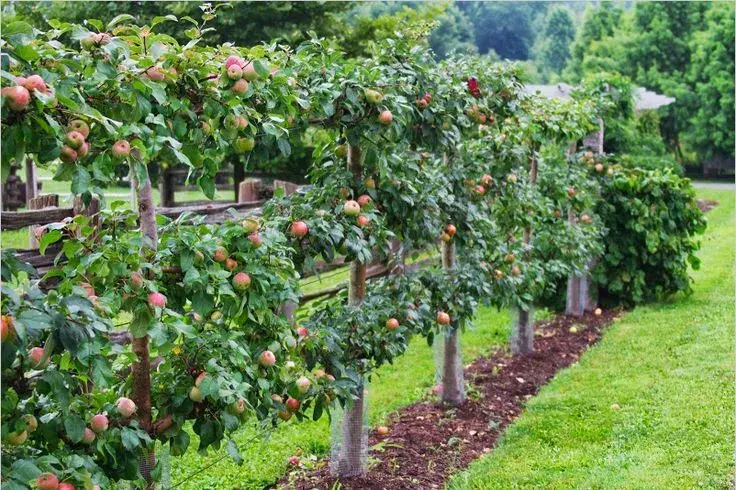
What It Is: Training a tree to grow flat against a wall or fence in a two-dimensional form.
Best For: Apples, pears, peaches and more.
Benefits: Saves space, increases sun exposure, and adds a unique visual interest.
Challenges: High maintenance, requires informed pruning multiple times a year to keep its horizontal shape and continue to produce fruit.
How To Do It: Prune and tie branches to a trellis or wire frame to create the desired shape. Start training when the tree is young for best results.
Open-Center Pruning

What It Is: Creating a vase-like shape by removing the central leader and encouraging outward-growing
branches.
Best For: Stone fruits like plums, peaches, and cherries.
Benefits: Improves light penetration, airflow, and fruit quality.
Challenges: Requires informed annual pruning
How To Do It: Remove the central leader and prune to leave 3–5 evenly spaced scaffold branches.
Colmunar Pruning

What It Is: Maintaining a single, upright trunk with no or minimal branches.
Best For: Apples, pears, plums, cherries and more
Benefits: Saves space, enhanced light distribution and airflow.
Challenges: High maintenance, requires regular pruning and creating tight fruiting spur networks.
How To Do It: Select one strong, vertical trunk and prune all other branches either off or to 4-6 inches.
Tips for Success with Fruit Trees in Small Yards
Plant in Full Sun: Fruit trees need 6–8 hours of sunlight daily for healthy growth and fruiting.
Regular Maintenance: Prune at least once every year, and closely monitor for pests and diseases.
Adequate Water Access: Trees that produce deciduous leaves and fruit generally require regular watering. Especially if they're newly planted or planted in containers where their roots can't access groundwater.
Mulch and Fertilize: Mulch to retain moisture and use organic fertilizers appropriately to support fruiting and growth.
Use Containers: Many dwarf trees can thrive in large pots, this will limit their growth above and below ground and will allow more flexibility in placement and easier maintenance.
When you choose some of the best varieties of fruit trees for your small yard and climate, combined with the right pruning techniques, even the smallest yard can produce an abundant harvest. Dwarf and semi-dwarf fruit trees, combined with creative pruning methods, make it possible even in tight spaces.
If you would you like help selecting the right variety, training or pruning your fruit trees, contact me today!

